Subscribe to my newsletter and...
Get a free chapter of my book.
I regularly share the updates on new design tutorials, tricks & news. You may expect also to get notified about my tools announcements. No spam!
Get free chapter + join newsletter


New Year is coming, and with it, new opportunities arise. As every year, let me make some predictions about what will play a key role for creative professionals in 2026.
Twelve months ago, I wrote about several things that I observed as new trends. Let’s check if they spread and impacted us:
Before we dive into global trends, I want to reveal a bit of a plan for my personal brand activities in the upcoming year.
More than just design. Throughout my professional career, I’ve touched multiple fields. I am a designer, writer, solopreneur, and creator. I was also a software developer for a few years (I earned a master’s degree in computer science). I want to share more insights and observations from multiple fields and how they all connect together. Expect more about creative professional craftsmanship, productivity, and creativity—also in the context of AI—and maintaining a proper balance between work and life after 9-to-5. Everything will be based on my observations, lessons learned, and even science behind it.
Regular newsletter. With my list of 9,000 subscribers (I cleaned up inactive contacts), I plan to post more frequently. As mentioned above, I’ll share more reflective content beyond UX/UI topics. If you’re interested, sign up and stay tuned.
Human evergreen content. I plan to publish fewer simple design tutorials and less news. Many channels already provide that. I want to continue adding value to the community in a different, more thoughtful way. The goal for me is to write about my own experiences, lessons learned, and observations. I hope creative professionals will find this valuable because it’s something you won’t find in any LLM.
Enough about thalion.pro plans. Now, let’s move on to the global trends.
Finally, let’s dive into the topics I observe that will play a huge role in the coming months.
Whether or not the current AI hype is the next dot-com bubble (I think it is, and it may collapse next year), this technology is permanently changing the way we work and create.
That’s why I continue to say that if designers want to prosper, they must do more than push pixels based on what clients or teammates tell them to do. AI will soon be able to generate “good enough” UIs.
Designers must become partners in business, understanding it better and proposing strategic solutions that thoughtfully impact the products they create.
One of the key elements left to humans, something AI can’t do yet, is trendsetting. AI generates based on what it was trained on. It recombines past data probabilistically. It can’t produce new states of art or set new trends.
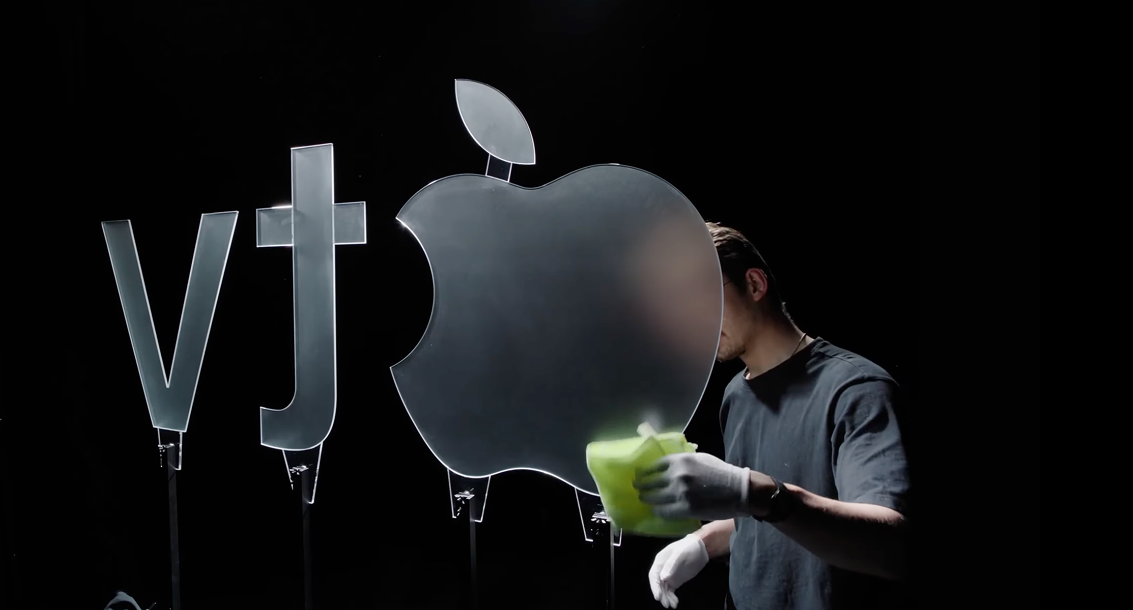
With iOS 26 and its controversial liquid glass, I see art making a comeback to the mainstream. Liquid glass may not be the best for performance or accessibility, but it feels like “only Apple can do it” (as Apple folks admit in their presentations). Apple continues to show the value of humans in the process by showing behind the scenes footage of their commercials, involving more analog techniques that require human skill.
There are obviously examples beyond Apple. I believe companies that care about being perceived as “human-driven” will join in and showcase amazing details. If AI takes care of efficiency and metrics, art is what remains for humans to create.
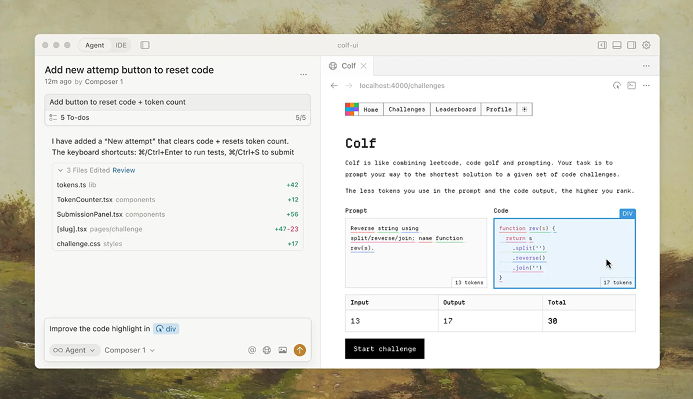
In recent years, we’ve seen Framer, Webflow, and other no-code tools allowing creative professionals to build real things. With AI, this will become the standard UX/UI design workflow.
Even today, I see many colleagues starting their work in Figma Make to quickly visualize stakeholders’ ideas. Some technically advanced ones connect company Design Systems to Cursor through Figma MCP and generate prototypes that feel like real websites or apps. This approach lets us quickly evaluate ideas and discuss something that “works.” It’s much easier to talk about a prototype that imitates behavior than just a series of screens. You can feel the difference.
This approach also brings some risks, like the high-fidelity illusion that makes it seem like the prototype is nearly done. But the advantages, building prototypes in minutes for team discussions or preparing motion design handoffs, make this refreshed approach worth adopting.
I see this trend continuing to disrupt the design process: fewer artifacts created just for the sake of creating them, and a leaner approach to quickly evaluate ideas. One thing is certain: we need to get very good at creating prototypes. That means not only mastering tools but also improving prompting communication techniques (prompting, after all, is just a kind of programming—a way to describe how things should look and behave, communication with the machine) and gaining more technical knowledge for vibe-coding solutions like Cursor.
After the initial wave of AI fascination, people are starting to reconsider their approach. AI raises questions about security, brand perception, and customer trust. Clients are becoming more conscious about when they want a “fast-food” AI solution and when they prefer a “delicious meal” handcrafted by a human.
This demands a clear approach from us, creative professionals. Using AI for automation and efficiency isn’t inherently bad. Clients just need to know that what they pay for reflects your expertise and a skill set tailored to their needs.
Yes, AI will again play a huge role in shaping trends for 2026. However, now it’s more about the value we, as creative professionals, add by integrating it into our workflows—not just overusing it for everything.
How do you feel about these predictions? Do you notice something else? Please let me know.


Subscribe to my newsletter and...
I regularly share the updates on new design tutorials, tricks & news. You may expect also to get notified about my tools announcements. No spam!
Get free chapter + join newsletter